The seat
UX lead on both sides of the glass.
Phenom
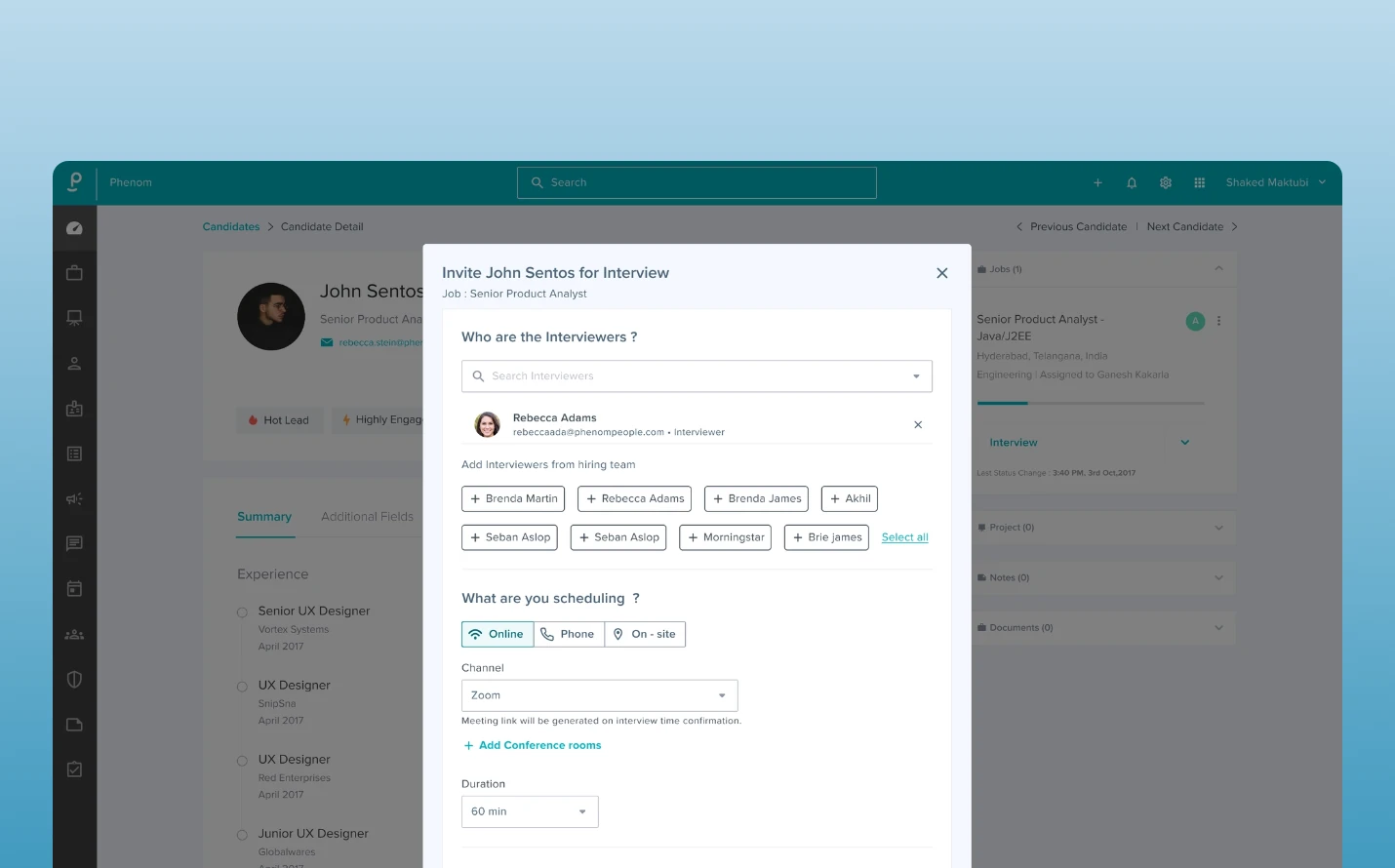
UX lead for the candidate bot and the management platform
1 UX designer · 1 UI designer
I owned the conversational strategy and the self-service direction. The candidate never sees the admin. The business never survives without it. Both were the job.
The business problem
Career sites were a lobby with no receptionist.
Only about 15% of career-site traffic was converting to a lead. Names and numbers were walking out.
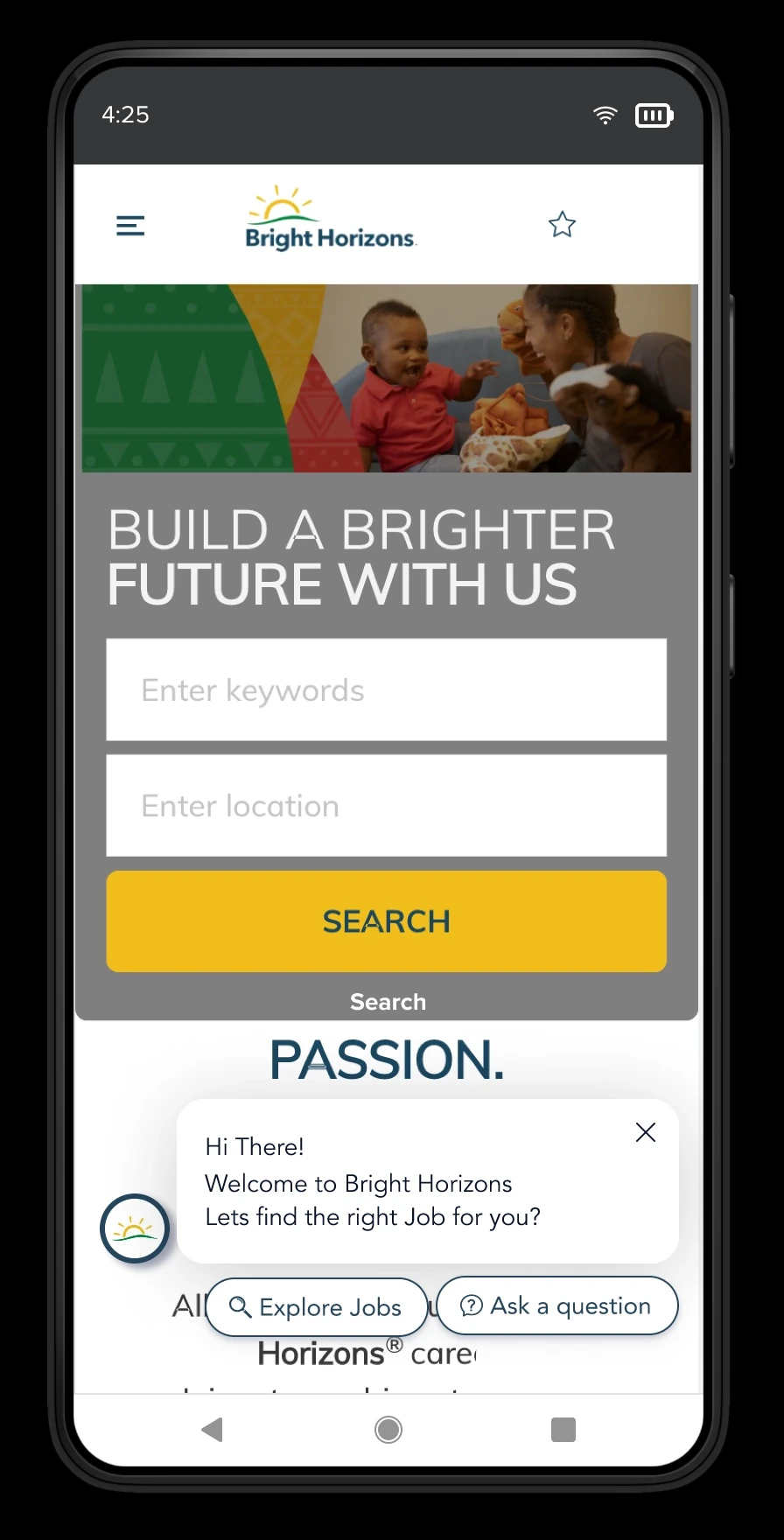
Phenom’s core was personalised career sites. Traffic showed up. Contact details didn’t. Chat was the obvious bet (every startup had a widget), so the bar was not “add a bot.” The bar was a bot a candidate would actually use, that paid Phenom back in pipeline.
FAQs
Benefits, culture, and leadership, answered without a call centre and without burning recruiter hours.
Job search
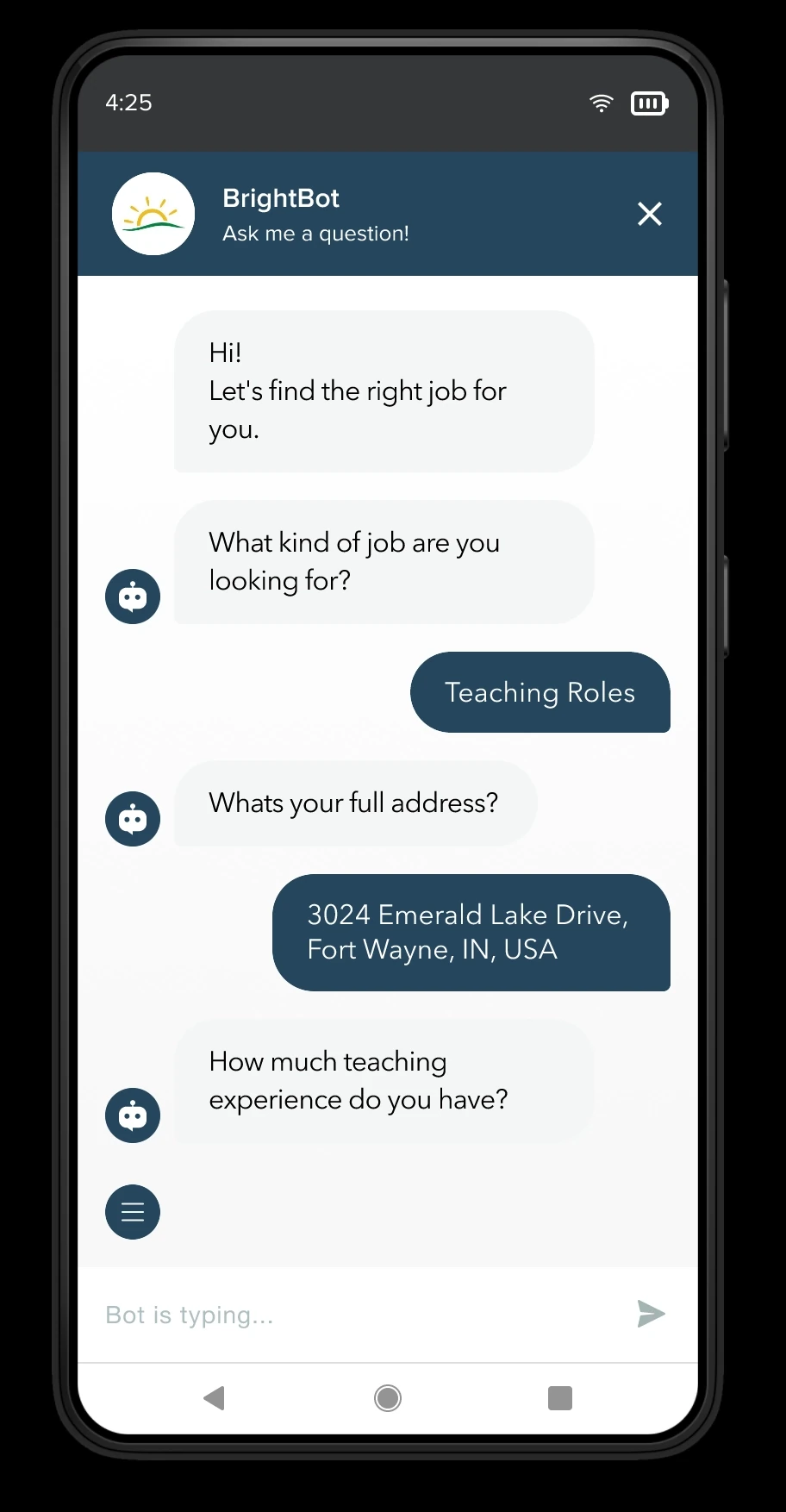
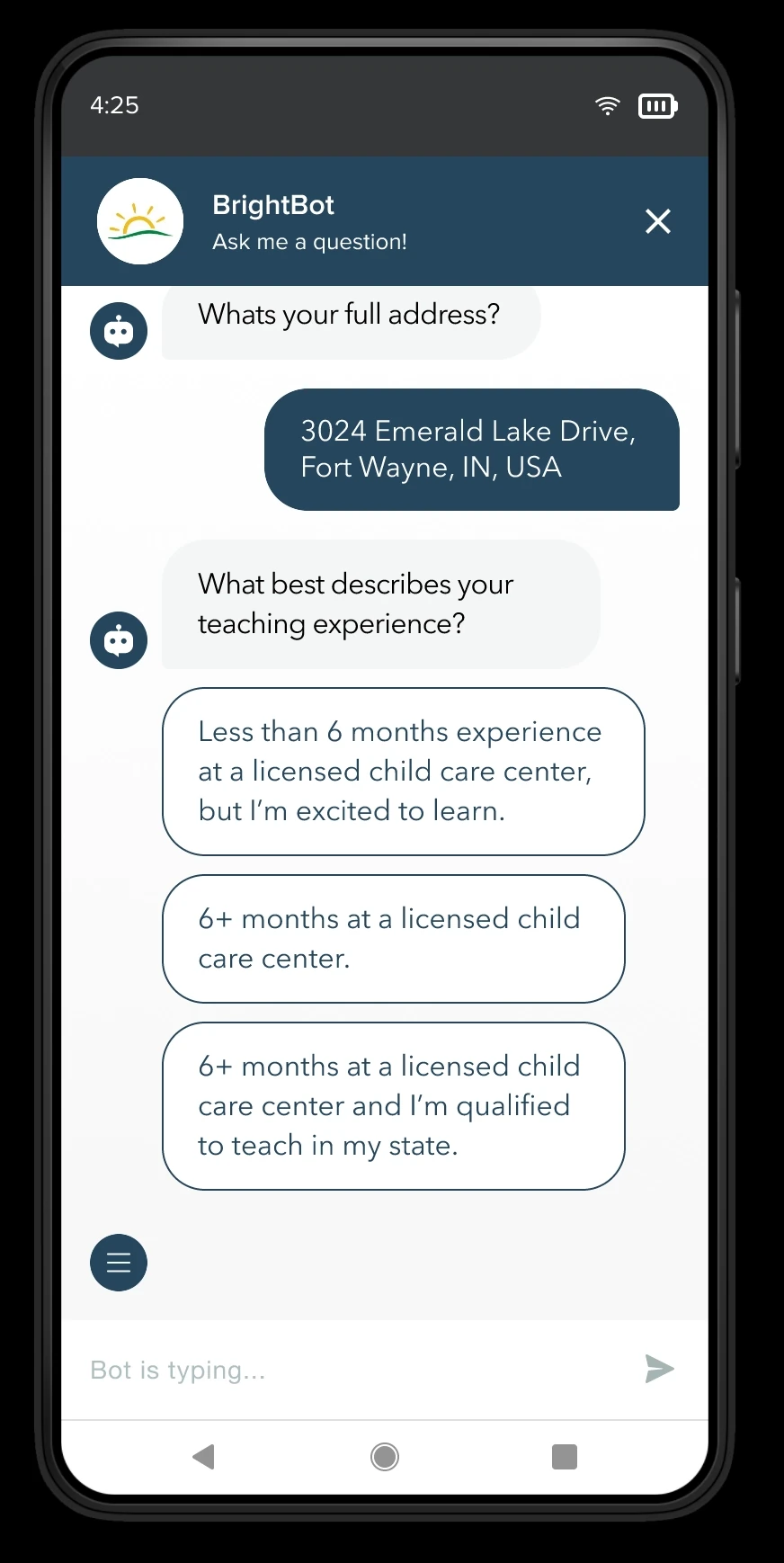
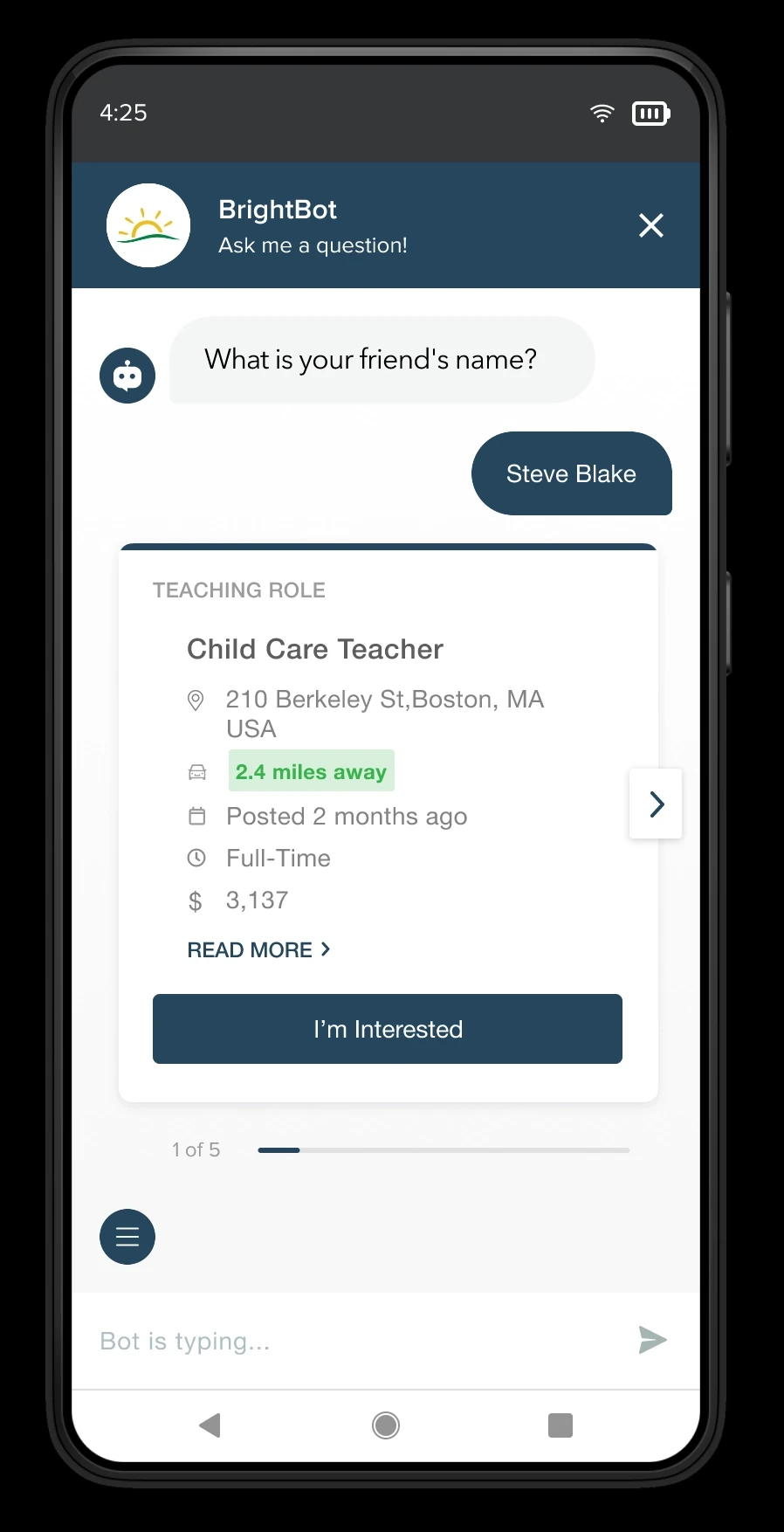
A short conversation: category, title, location, experience. Then real openings, not a form.
Lead, after value
Name, email, phone captured because the bot helped first. A trade, not a tollbooth.
Similar jobs
When the first query runs dry, related roles by title and location keep the visit alive.
Job alerts
Nothing today? An email alert keeps the candidate in the pipeline for the role that doesn’t exist yet.
The turn
Stop whispering. Give the job before you ask for the name.
The first version waited. Almost nobody started it: 0.02%. A proactive pop-up pushed engagement as high as 7%. Sound added a little more, and then too much: once the bot popped and chimed on every page, candidates who were scanning jobs got annoyed. Conditional triggers put it back in its place.
The sharper call was the order of operations. Early flows asked for personal details before showing jobs. We flipped it. Show the work, ask for the lead only after interest. People expected the lead count to drop. It went up, and the leads were better. Give first, then ask.
Part two
If customers can’t own the bot, onboarding takes 3+ weeks.
Every styling tweak, every FAQ, every interaction change went through implementation or engineering. Adding FAQs alone could take more than three weeks while talent marketers assembled question-and-answer pairs. Candidates went unserved. Both sides lost the week.
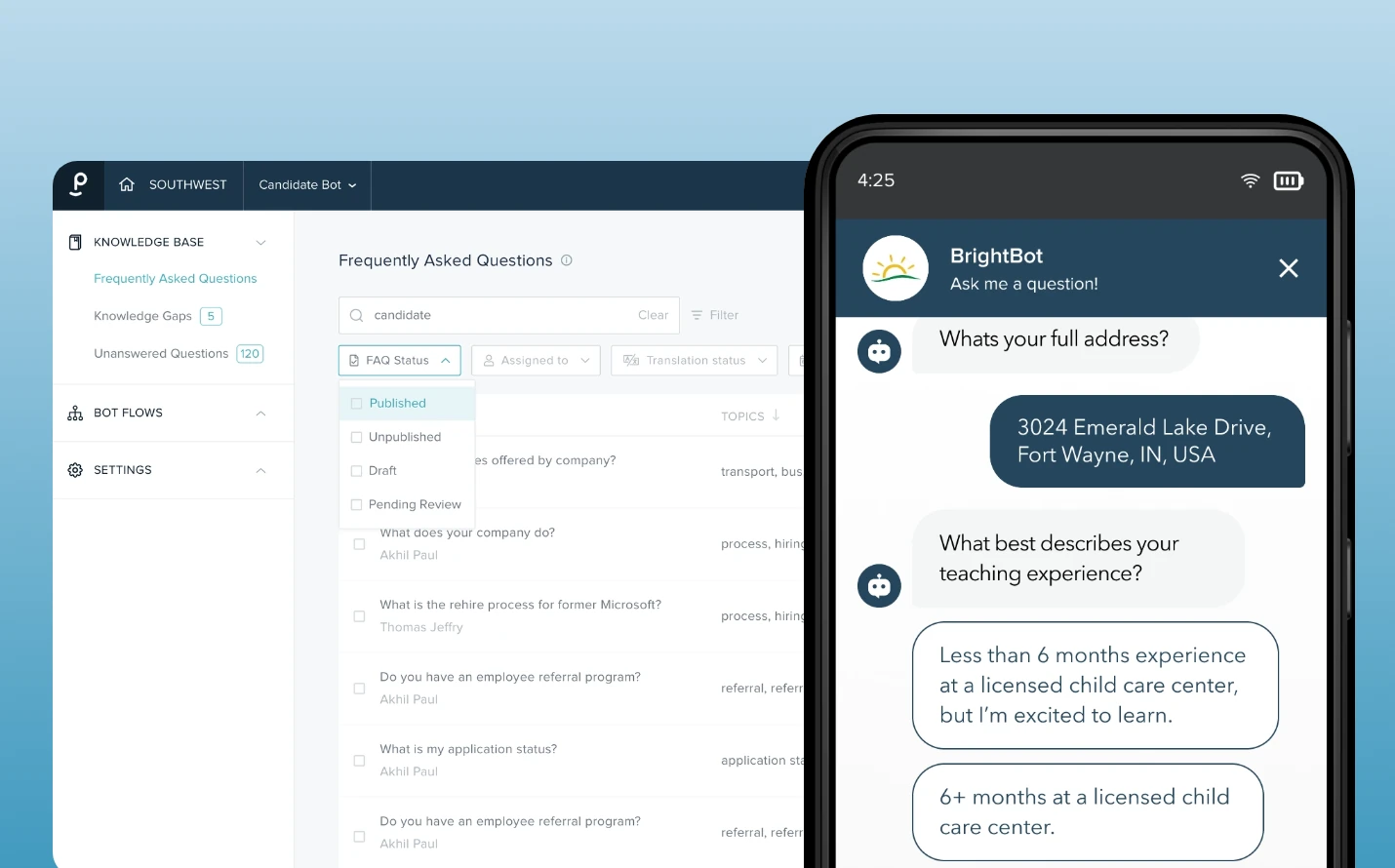
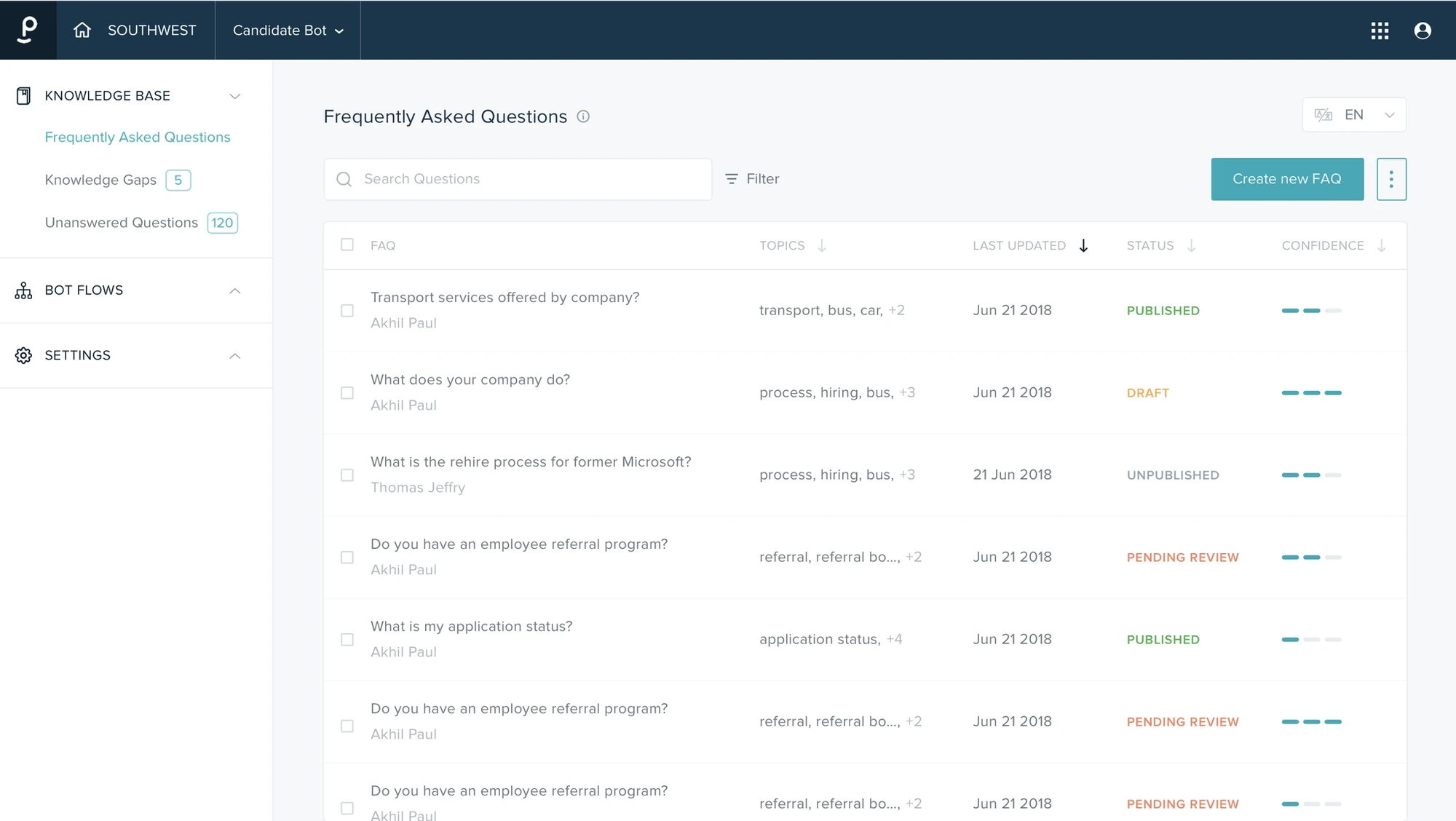
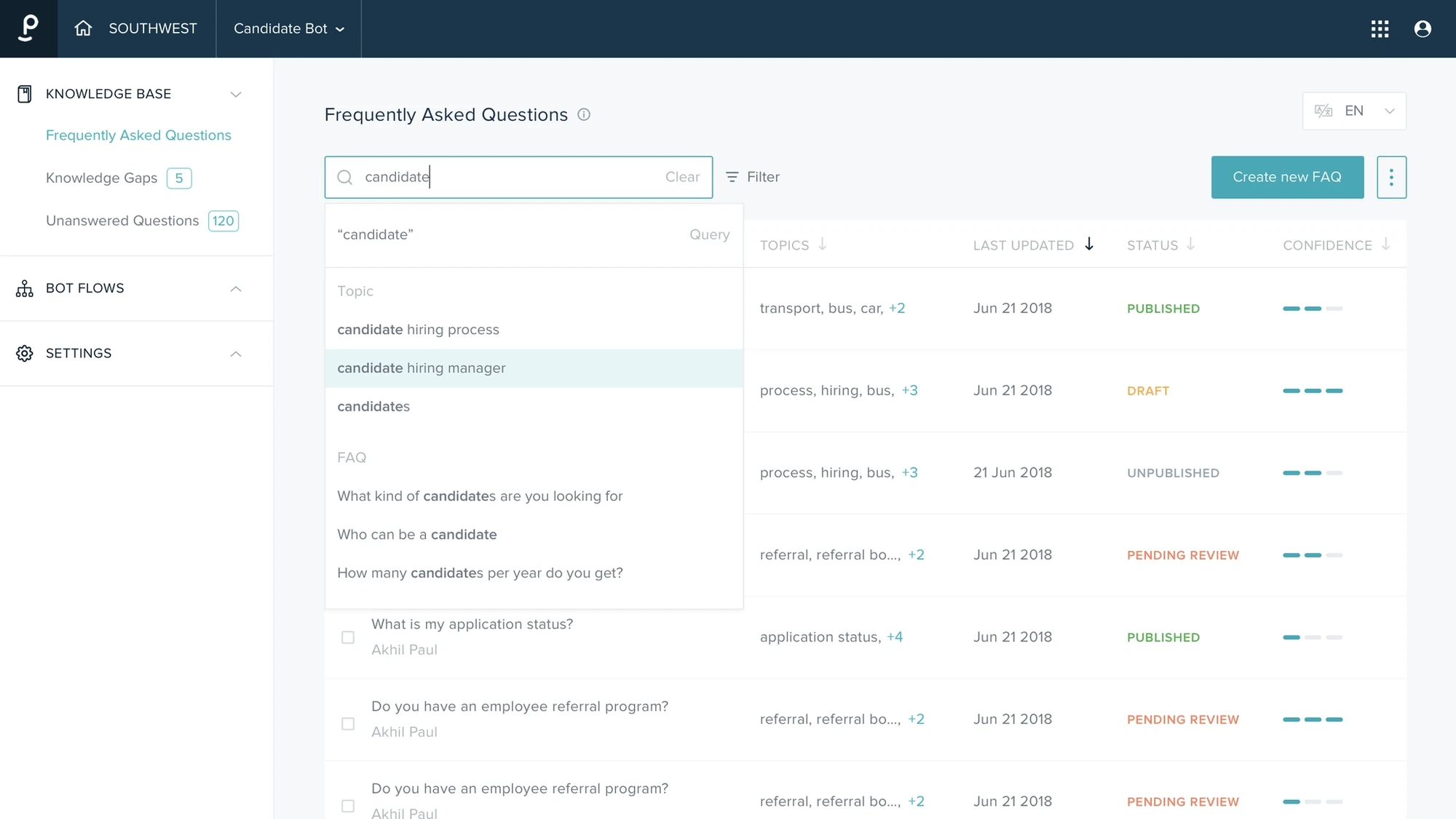
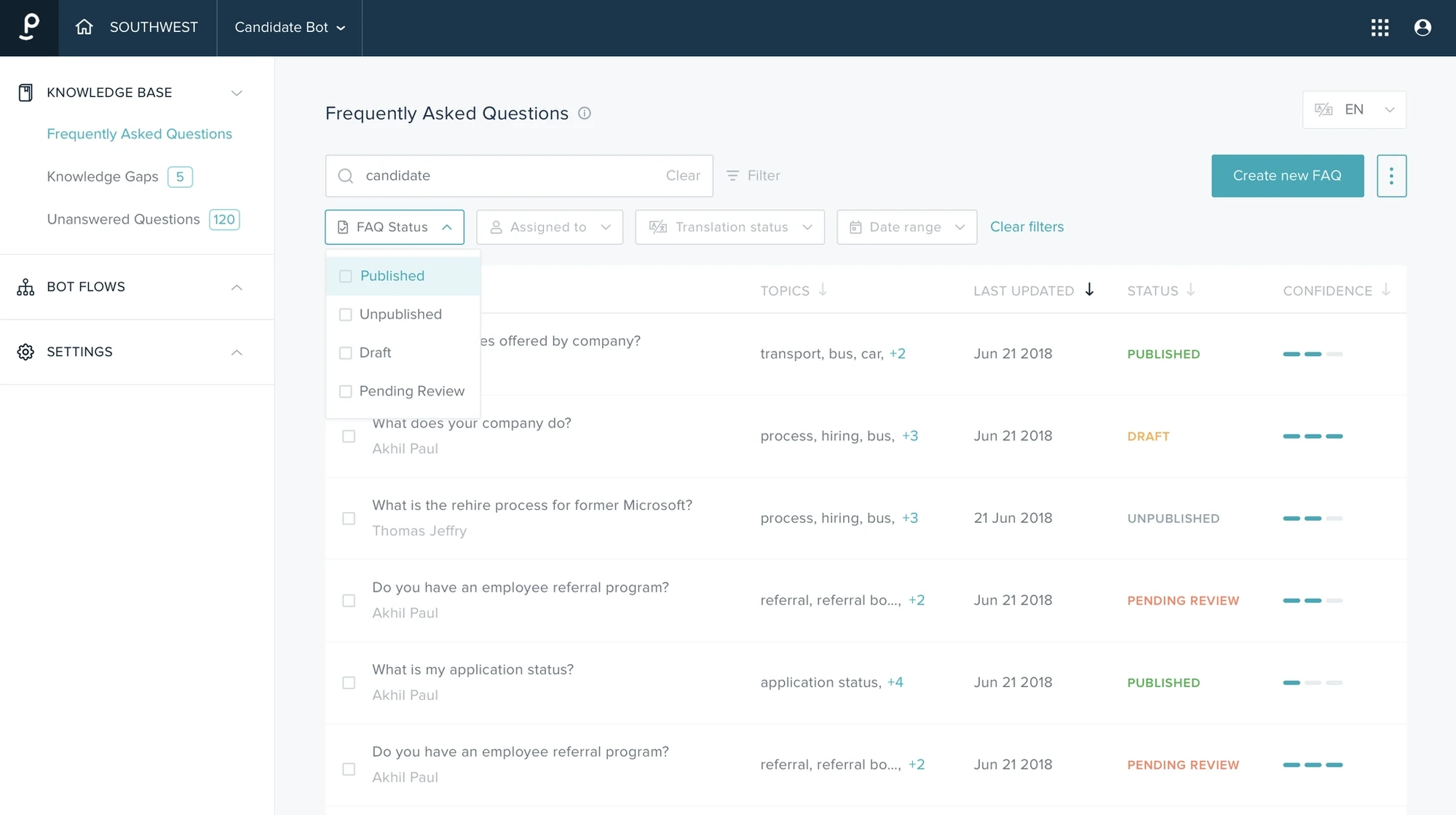
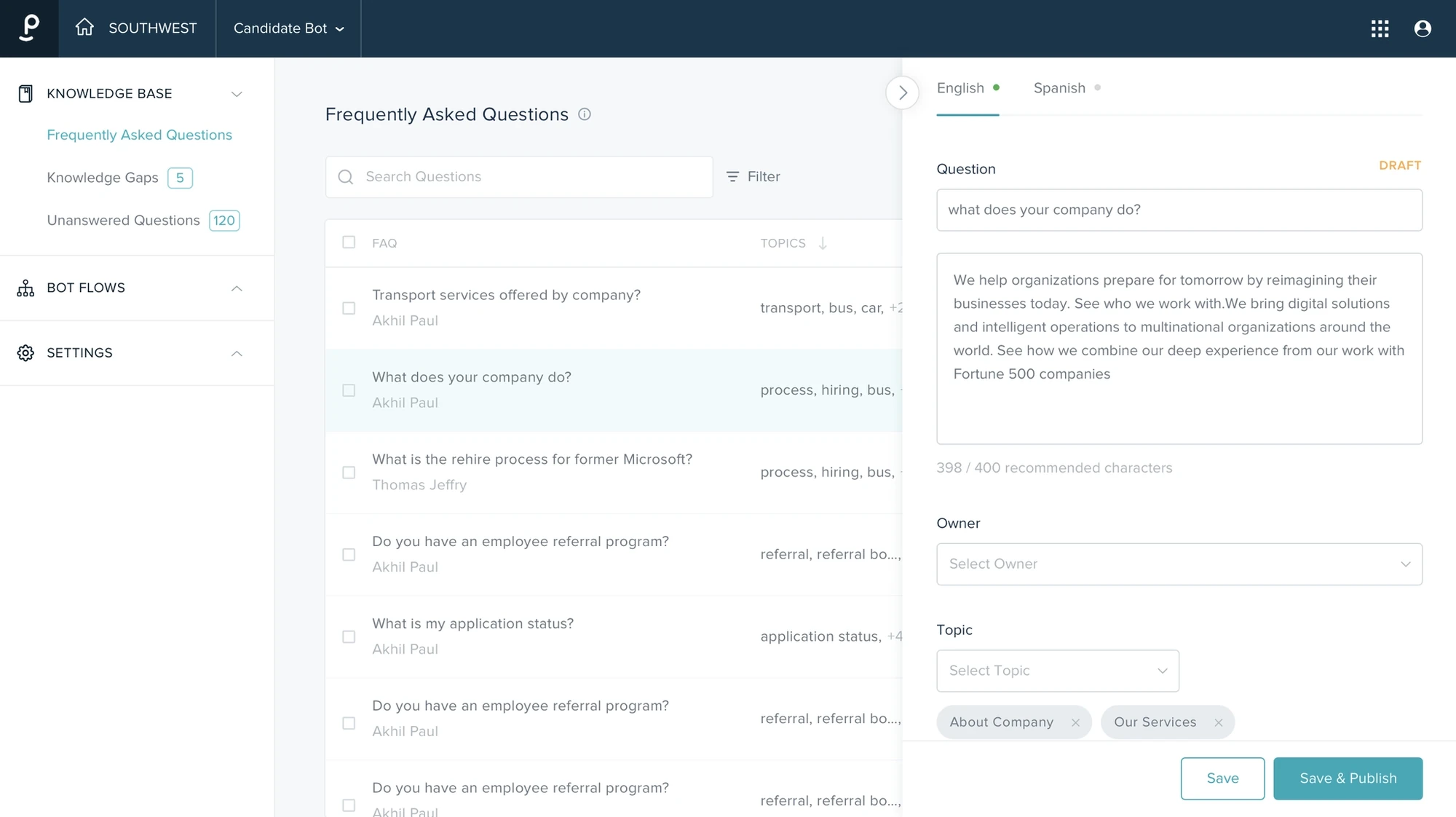
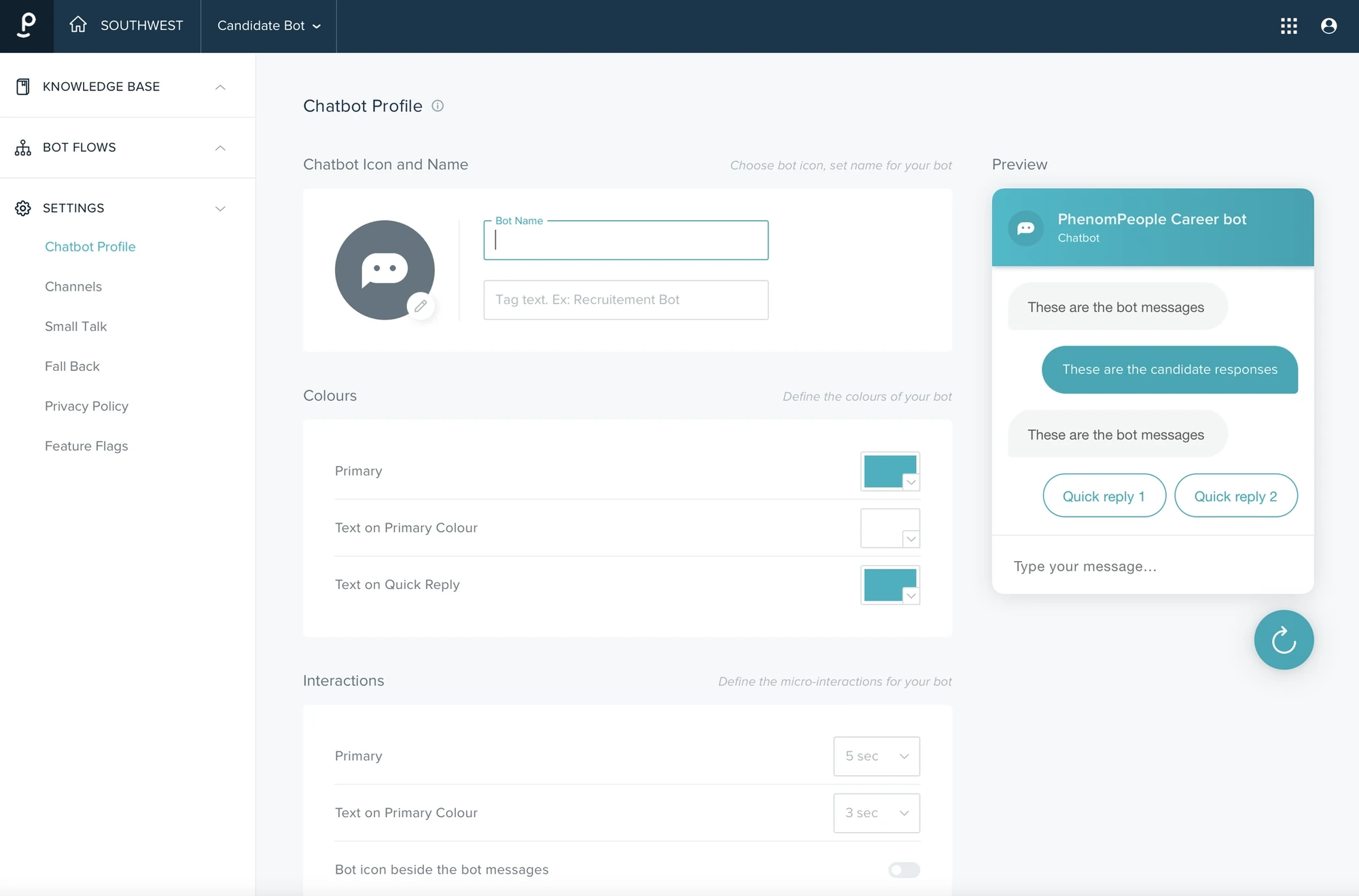
The management platform is the growth strategy: customers change the bot on their own clock. No ticket. Three modules (FAQs, knowledge gaps, and settings) and a live preview so nothing is published blind.
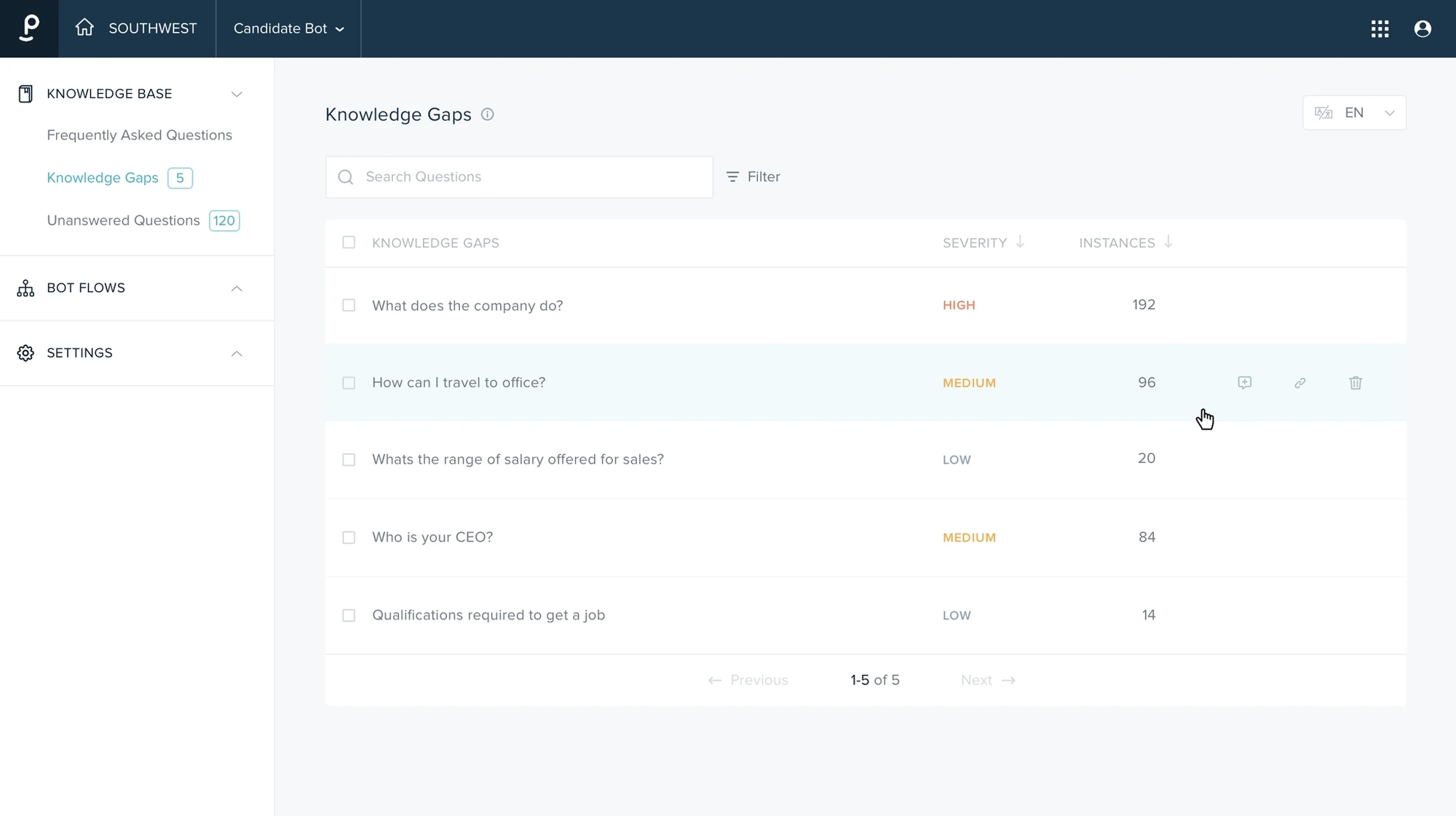
When a candidate asks something, the bot answers if it can match an FAQ at 80% confidence or better. Below that, it falls back and logs the query. Knowledge gaps shows the patterns, ranked by severity and frequency. Unanswered questions shows the actual conversation, so a recruiter can reply or attach the query to an FAQ and close the hole.
What it did
A widget became the front door. The unit became a business.
Candidate-facing engagement moved from 0.02% to as high as 7%. The career sites behind the bot reached 100K+ weekly users. The chatbot business unit this work anchored scaled from zero to $10M in revenue. The management platform was built to take onboarding off the ticket queue.
What I’d tell another lead. Attention is a design material. Too little and you don’t exist. Too much and you get closed. Self-service is not a settings page, it is how a B2B company stays on its roadmap. And the order of the ask matters more than the polish of the ask.
Scheduling, after the acquisition missed.
Open it