The seat
I made the revamp-versus-refresh call, then ran it.
Birdeye
Manager, Product Design
Vision, four executive review cycles, Experience Score direction
I led the design effort: the decision to rebuild rather than reskin, the executive reviews, and direction for the lead designer on the Experience Score system. Product, engineering, data science, and exec stakeholders were in the work, not briefed after it.
The decision
A prettier chart would not win the deal.
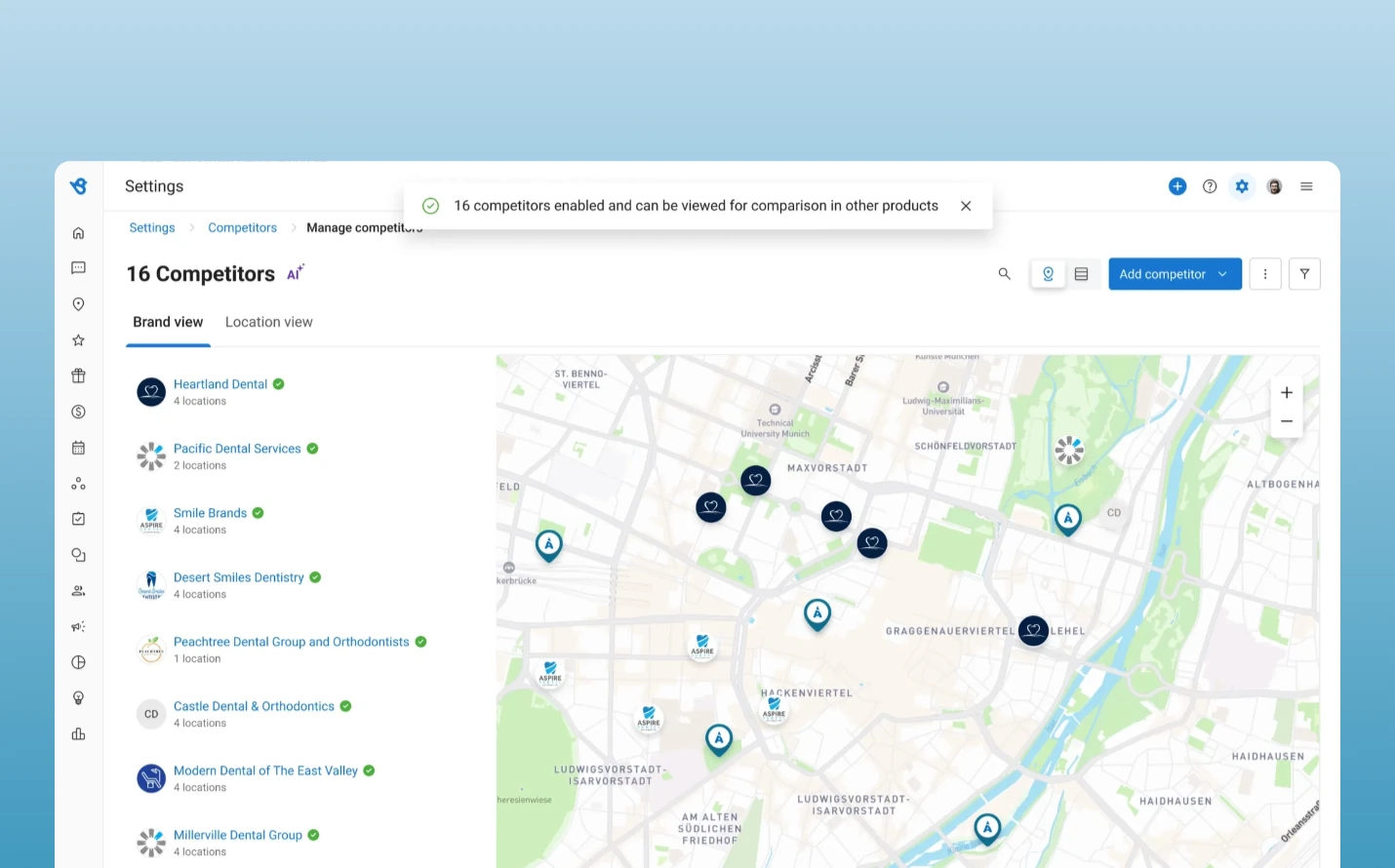
Birdeye already had Insights. Sentiment was thin. It wasn’t enough value to make a customer choose Birdeye over Sprinklr or Reputation. The early question was whether this was a UI refresh. Competitive analysis said no. This had to be a product, or it would stay a tab.
“Give our customers a consolidated view of what is not working, and what to do about it, for a location, a region, and the brand.”
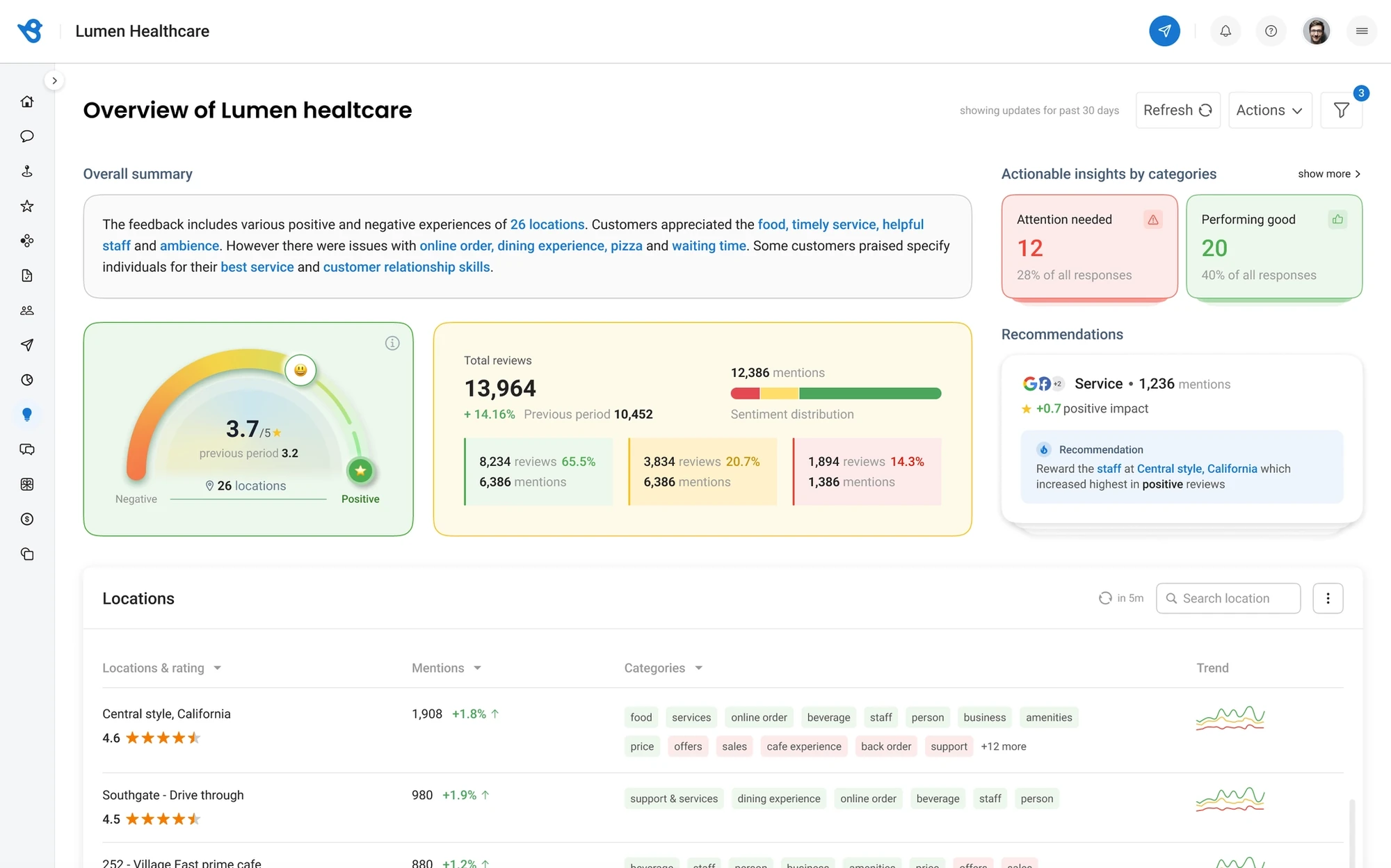
Picture a multi-location brand that wants to know what people say about the product, the delivery, the price; how that compares with the category; and whether every location is listed correctly on the directories that matter. That is the job Insights 2.0 took.
The instrument
One score. Three ways it can be wrong. A path to act.
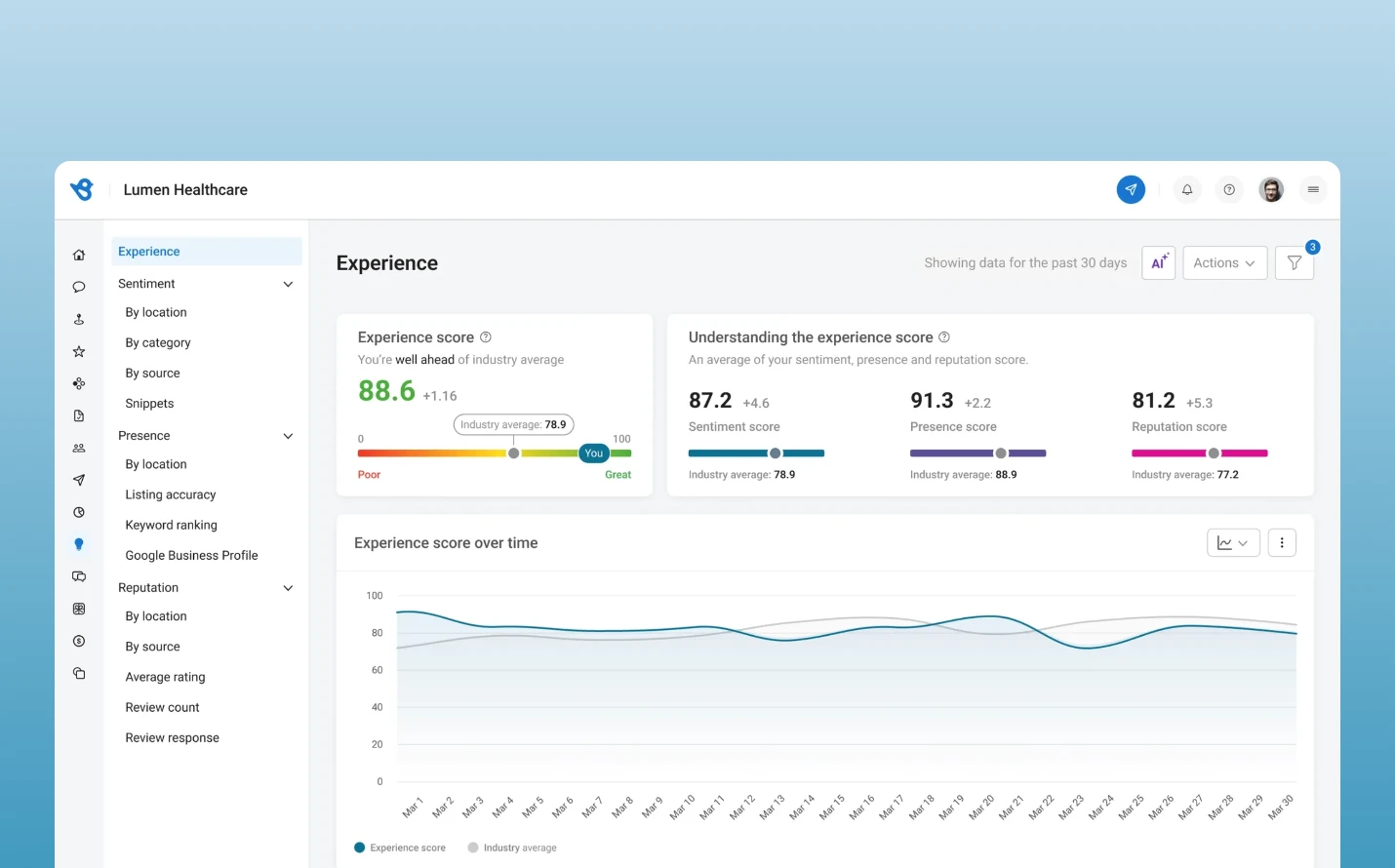
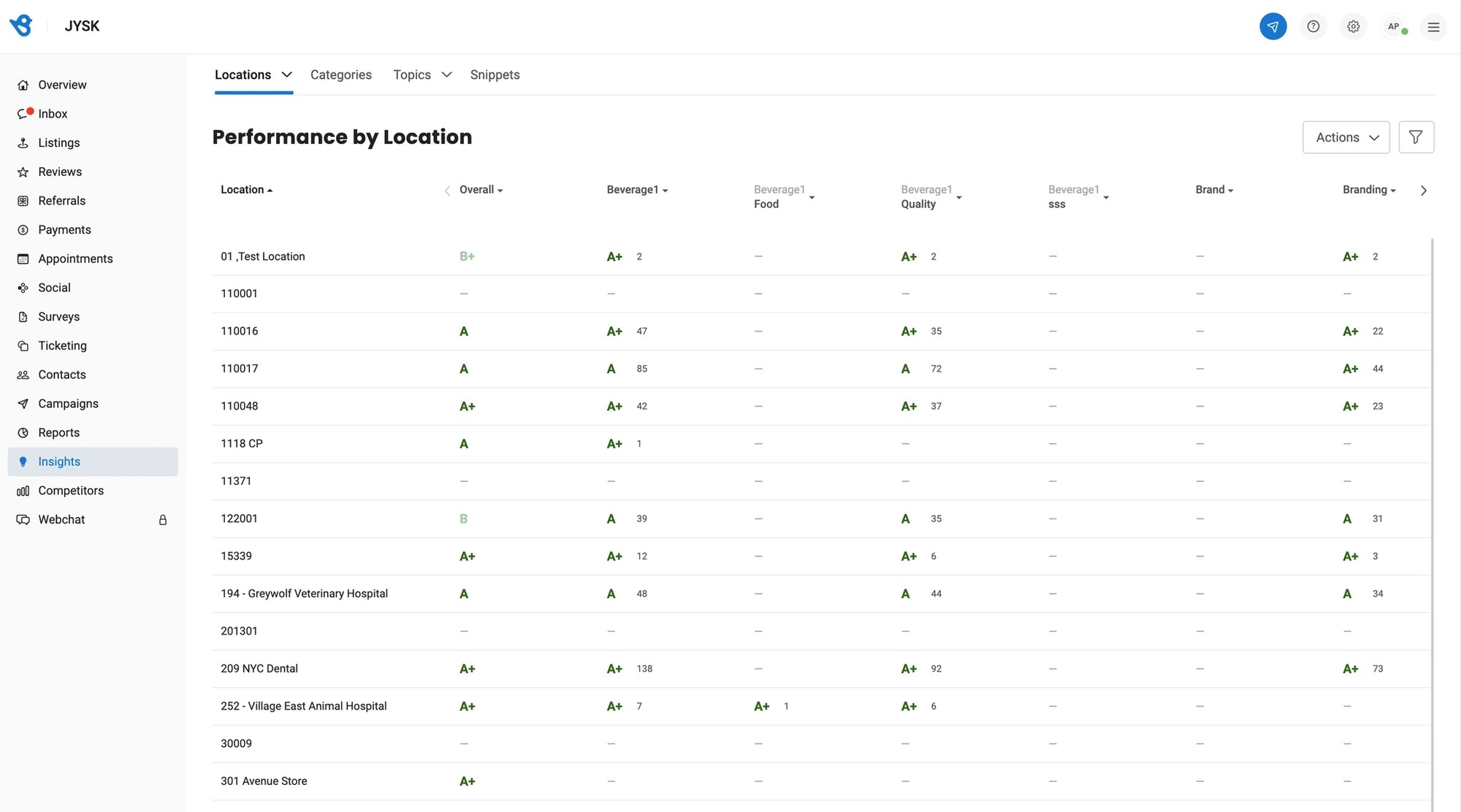
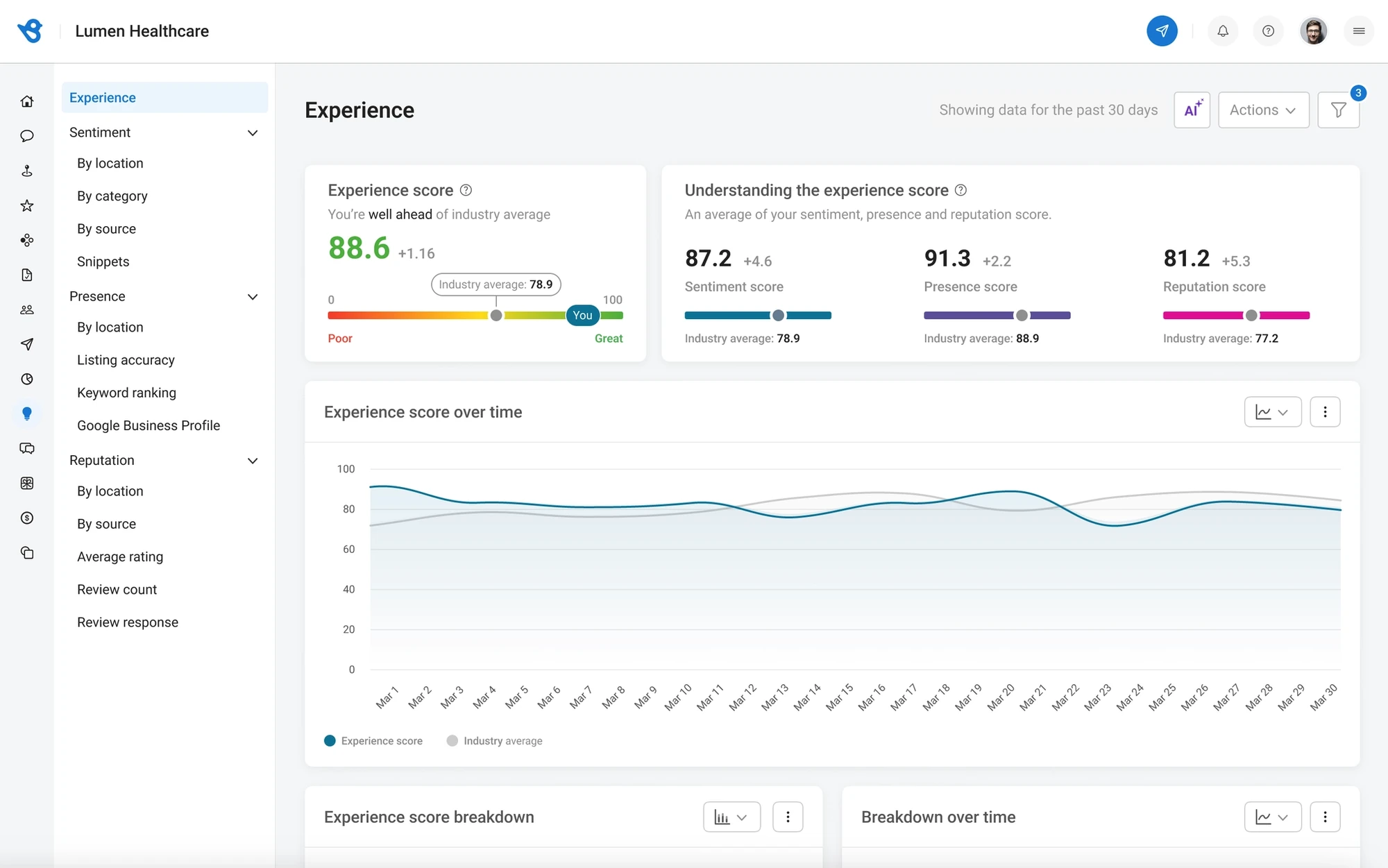
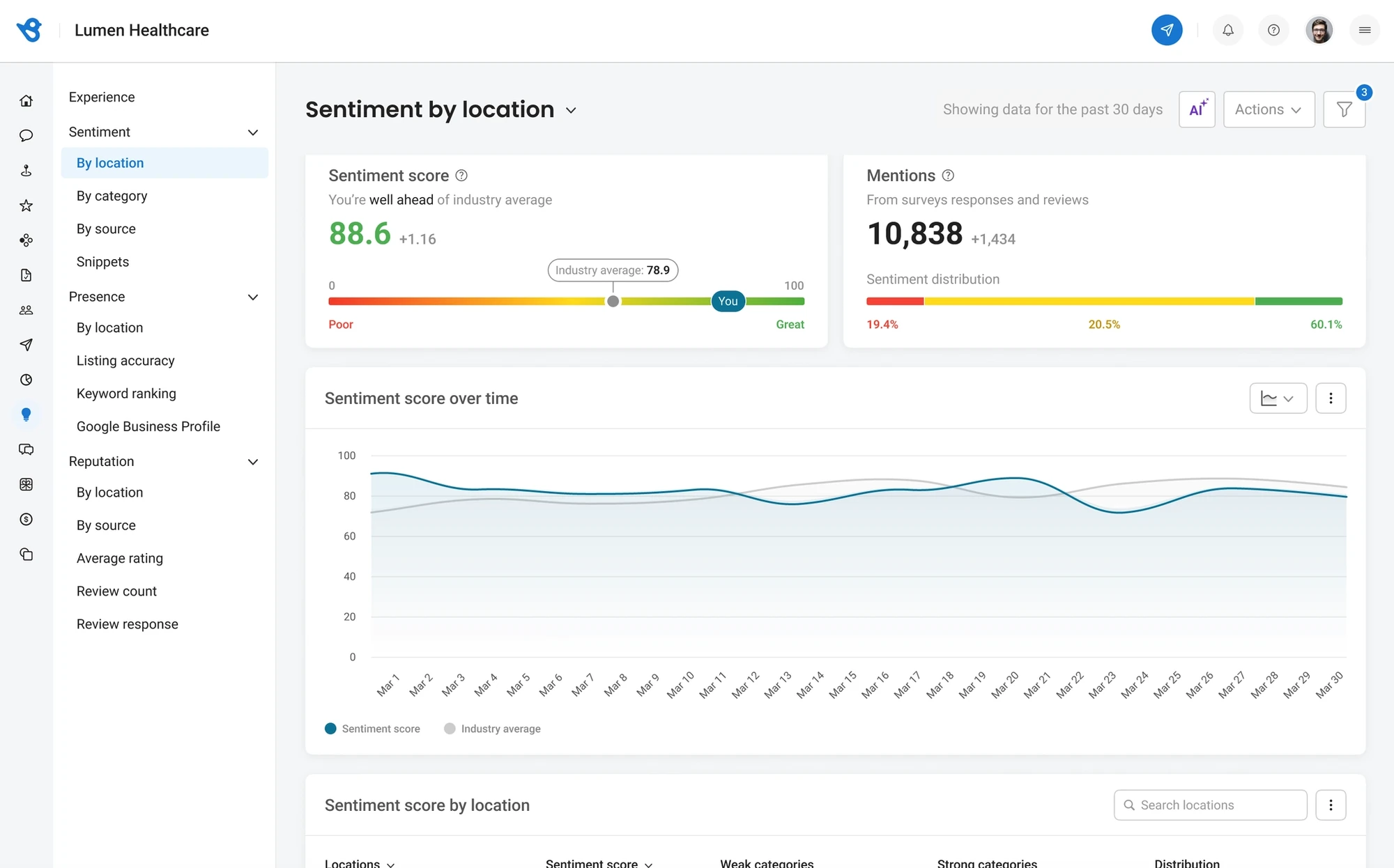
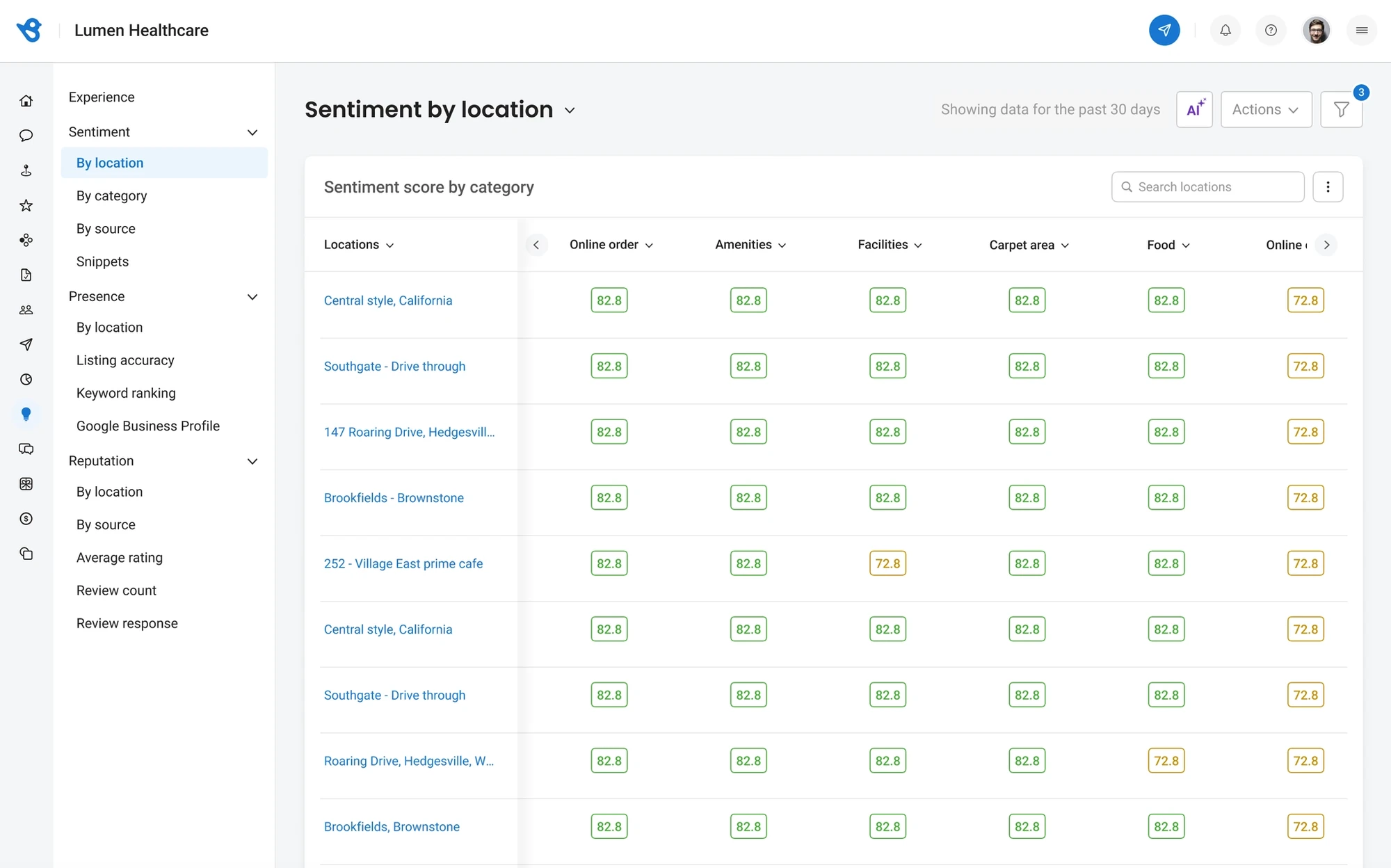
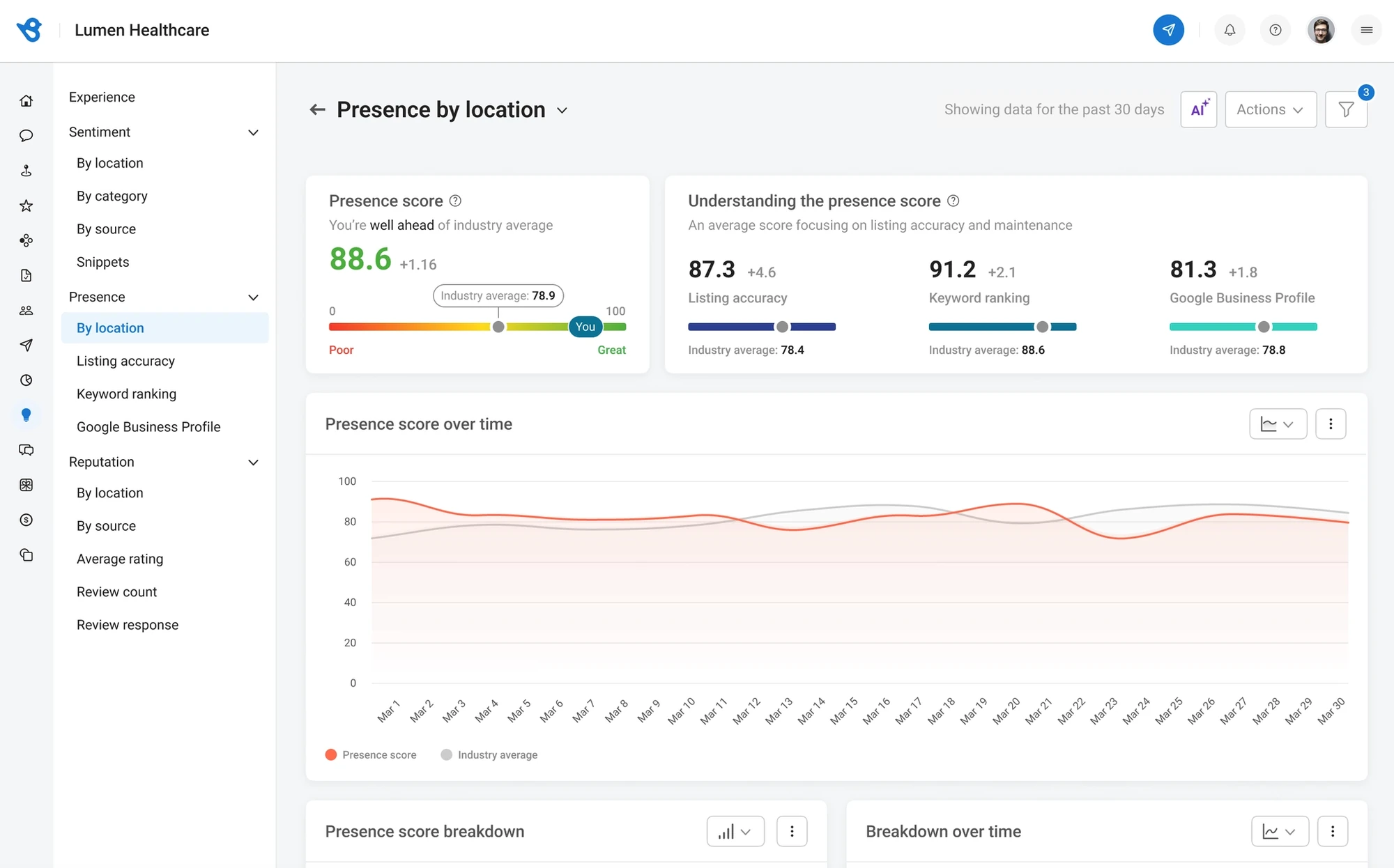
The Experience Score is a single read on brand health across locations. It breaks into sentiment, presence, and reputation, then drills by location, category, and time, so the number is a door, not a poster.
Sentiment
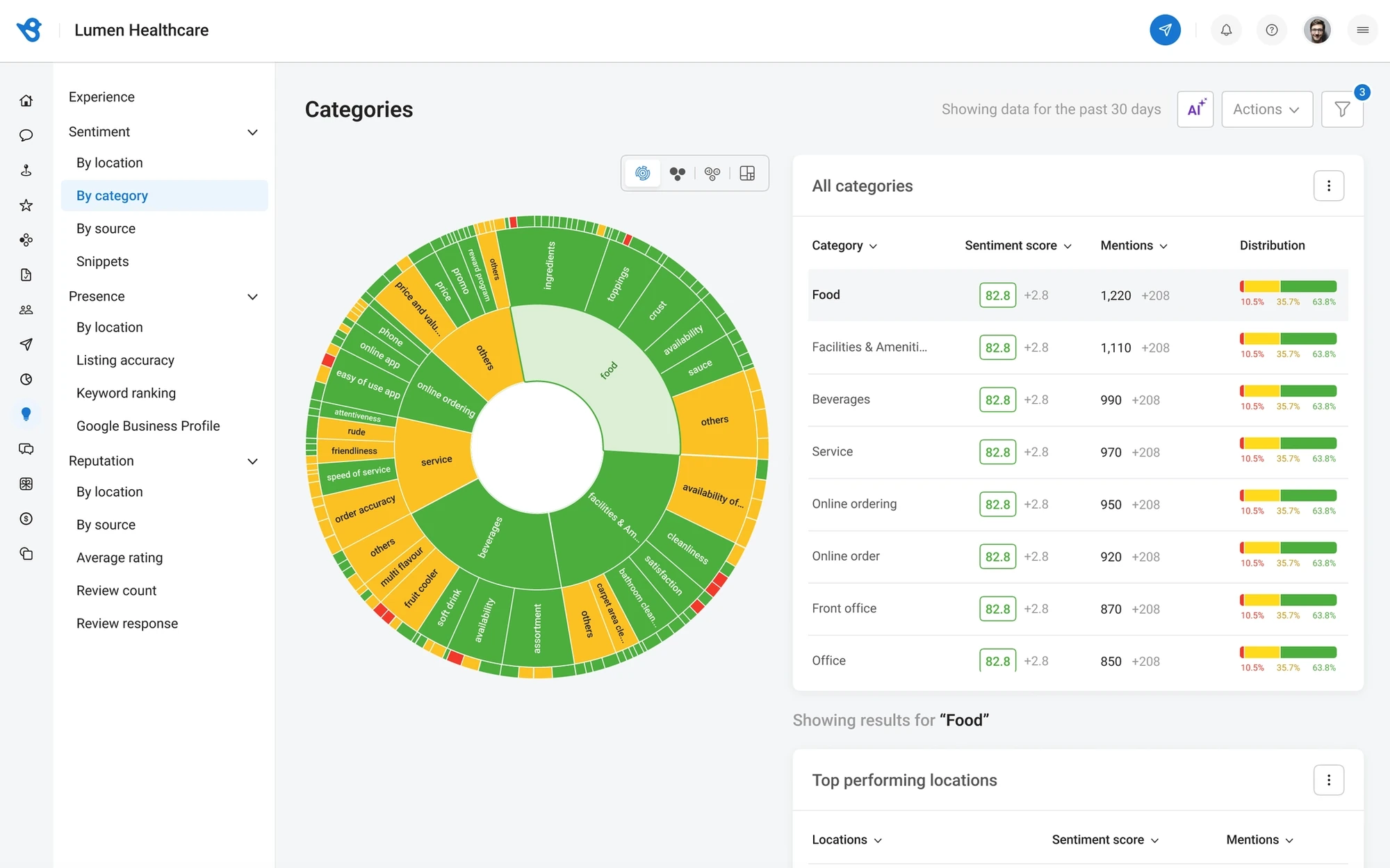
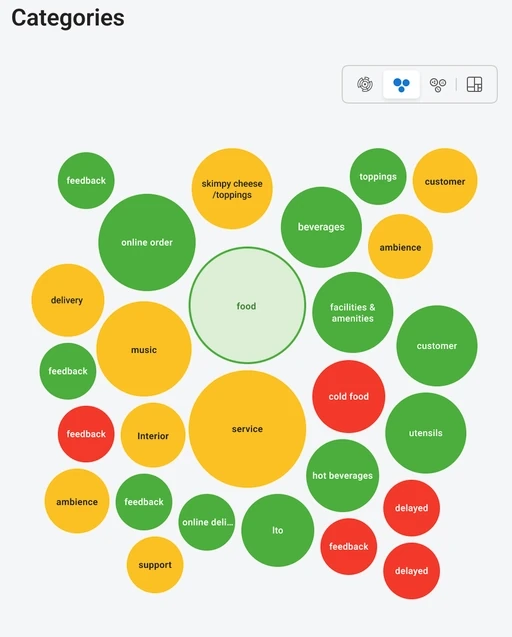
Reviews and surveys, as a number, cut by location and by category: food, service, ambience, and the rest.
Presence
Are the locations listed accurately, and are the keywords ranking the way SEO says they should?
Reputation
Average rating, review count, response rate. Plus the trend, so effort is visible.
Bubble charts, treemaps, and radial views give more than one angle on the same data. Each score opens a drill-down. The point is the action on the other side of the number.
The receipt
$0 to $5M ARR. Eighteen months.
Insights 2.0 replaced a limited sentiment view with a score enterprise customers could read, and a path to act by location, category, and time. Beta customers called it visually ahead of what Birdeye had, and useful: more visibility into where staff needed to work. The ask that followed (“can I take the action from here?”) was scoped as a later phase, on purpose, until the score proved itself.
What I’d tell another lead. This started as a UI project. Customer-success conversations killed that idea. Buyers and end users want different things, and executive input is how you hear the buyer. Teams switching tools need the learning curve flat. Parity is a kindness, and a sales tool. And developers are partners: API and platform constraints show up early if dev leads are in the review, not after the file is “done.”
Competitors, finally worth turning on.
Open it